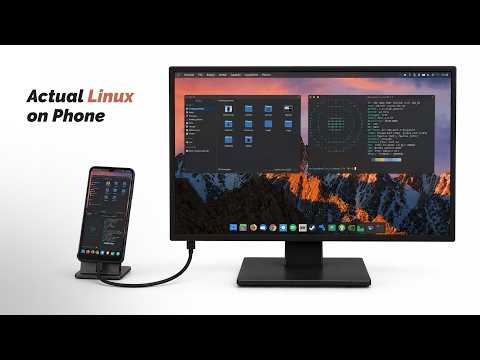
I tested:
* Android Virtualization Framework (AVF) on Android 16
* Linux containers with hardware acceleration
* Proot-based Linux setups
* External monitor desktop mode
* Docker on Android
* VS Code, Blender, LibreOffice, Chromium, Wireshark and more
One setup was running full Debian Linux directly through Android’s built-in virtualization framework, while another was using hardware-accelerated Linux containers on a normal Android phone.
Timestamps
00:00 Intro
00:39 Android 16 Native Linux Setup (AVF)
01:51 Linux on Any Android Phone
03:22 Can It Replace a Real Laptop?
I also tested:
* Linux desktop performance on Android
* Stability and crashes
* Hardware acceleration with Mesa Zink + Turnip drivers
* Proot vs containers
* Real-world usability
* Coding and development workflows on a phone
I even built and tested a Python project entirely on an Android phone.…

著者について